

Teaching Robots and AI to Understand People.
Robots don't just need to understand the world.
They need to understand the people living in it.
Human Data captures how people move, interact, communicate, manipulate objects, perform tasks, and navigate the physical world. It provides the behavioral intelligence that enables robots and AI systems to operate safely, naturally, and effectively alongside humans.
Together with World Data, Human Data forms the foundation of Physical AI.
The behaviors, environments, and interactions robots must learn.
Our Human Data programs capture the behaviors, environments, and interactions that robots must learn before operating in the real world. We collect:
Human Actions
Real-world tasks, body movement, gestures, object manipulation, fine motor skills, and human-to-human or human-to-robot interactions.
Human Environments
Homes, workplaces, retail, healthcare, industrial facilities, and public spaces, capturing how people interact with the environments around them.
Human Context
Speech, conversations, social interaction, intent, environmental audio, and the subtle context that allows AI systems to understand human behavior.
Human behavior cannot be understood through a single sensor.
Our datasets combine multiple synchronized modalities, including:
- Video (egocentric and third-person)
- 3D capture (LiDAR, volumetric video & Gaussian Splats)
- Audio & speech
- Wearable cameras
- Motion capture
- Mobile & static 3D scanning
The result is rich, multi-modal datasets built for the next generation of foundation models and Physical AI.
Human Data powers:
- Humanoid Robots
- Physical AI Foundation Models
- Vision Language Models (VLMs)
- Robotics Manipulation
- Human-Robot Interaction
- Embodied AI
- Simulation & Digital Humans
Every useful robot must learn from people before it can work alongside them.
Whether learning to open a door, stock a shelf, assist a customer, or collaborate with a colleague, robots need large-scale, diverse, real-world examples of human behavior.
Robotic Data provides the datasets that make this possible.
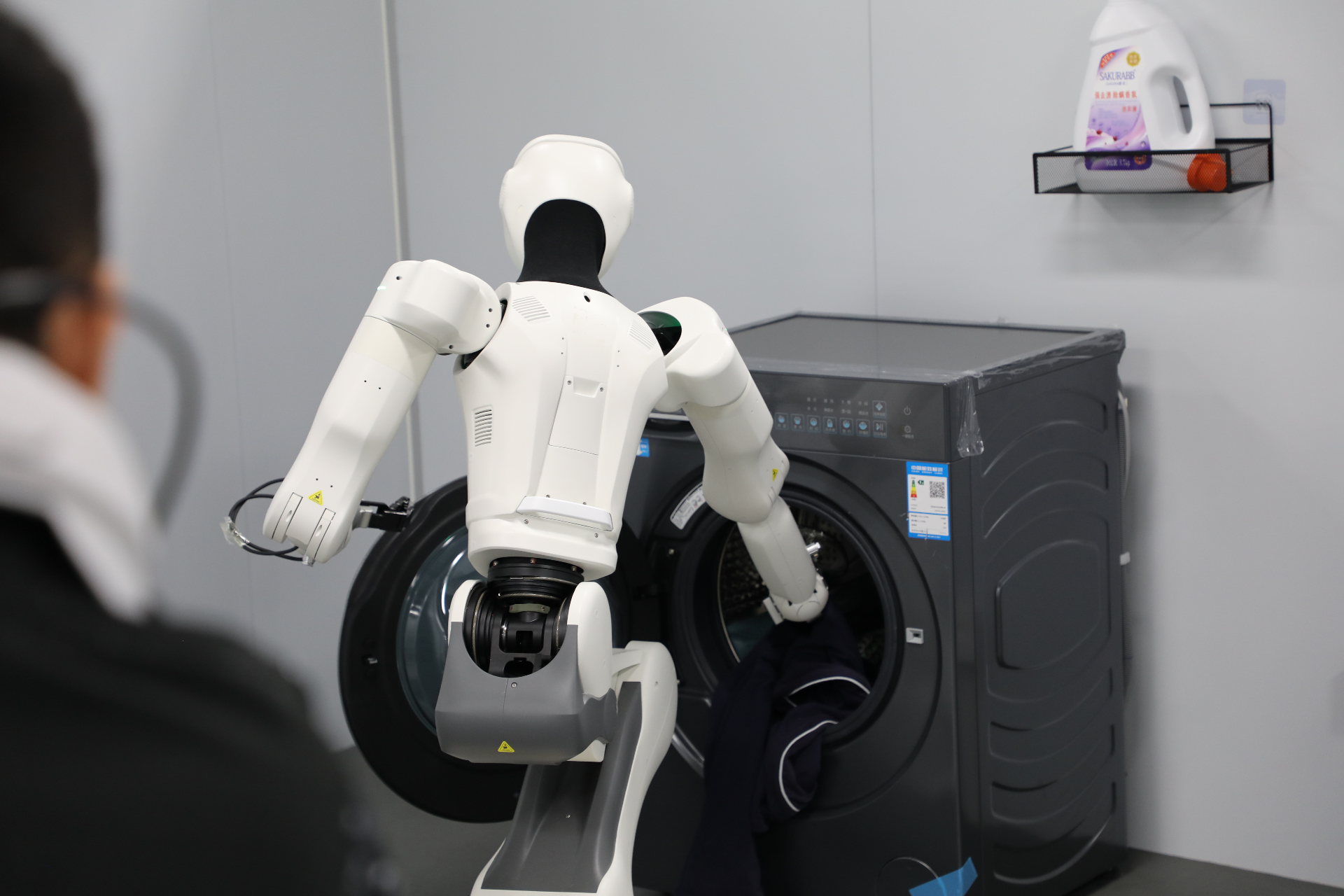
Robots don't learn from World Data or Human Data in isolation. They learn by connecting the two.
World Data teaches robots where they are.
Human Data teaches robots what to do.
Together, they create Robotic Space, the unified data foundation that allows Physical AI to perceive, reason, and act in the real world.